



What is GMP Click Here?
Kevin Eric Smith
,
+1-877-633-4688
U.S.A
|  | 
Gout In Big Toe (WARNING -- images may be disturbing)
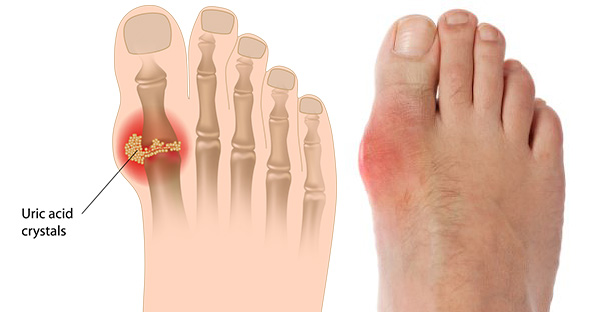
Many describe waking up in the middle of the night in agonizing pain, stating they felt as though their big toe was literally on fire. This complex form of Arthritis has no bounds when it comes to joint selection, it can settle just about anywhere. However, for most, Gout has a striking tendency to attack the foot, more often and specific to the big toe joint. Ancient Greeks referred to Gout as podagra, which means the "foot grabber."
The proclivity of monosodium urate crystal settlement in the first metatarsophalangeal joint may be multi-faceted. Gout is temperature sensitive. Urate solubility decreases at lower temperatures and enhances new crystal formation. Considering the big toe is the furthest from the heart, and the coldest, it is the most susceptible area to uric acid settlement.
It is also an area vulnerable to minor trauma (think stubbed toe). Where injury befalls, uric acid tends to settle. MSU crystallization is enhanced by both physical and biomechanical stress. This trauma lowers the pH of the body and increases calcium ion activity, a perfect breeding ground for urate proliferation. Additionally, the big toe joint is often associated with Osteoarthritis, with an apparent connection between these two conditions. Studies show the propensity of monosodium urate crystals to settle in osteoarthritic (damaged) cartilage.
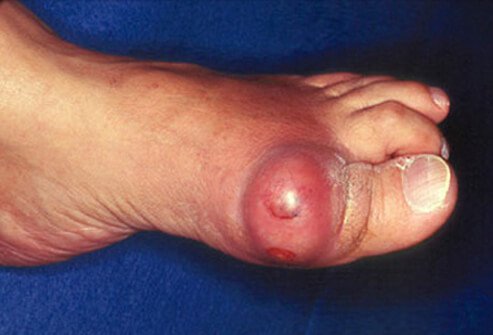
Gout can cause sudden burning and intense pain with accompanying stiffness and swelling. Many people report their first attacks beginning in the big toe. Over time, these uric acid build-ups can cause severe damage to your joints, tendons, and other tissues.
|
|